

Five Things to Remember When Co-Regulating

Supporting someone through moments of distress can feel challenging, particularly when emotions are running high and the situation feels urgent. Whether you are a parent, support worker, teacher or therapist, it is natural to want to immediately solve the problem and make the situation better.
However, one of the most powerful tools we have in behaviour support is something much simpler: co-regulation.
Co-regulation refers to the process of helping another person regulate their emotions, stress levels and nervous system through our own calm and supportive presence. Before people can think clearly, learn new skills or solve problems, they often need support to feel safe and regulated.
While every person is different, there are five important things worth remembering during these moments.
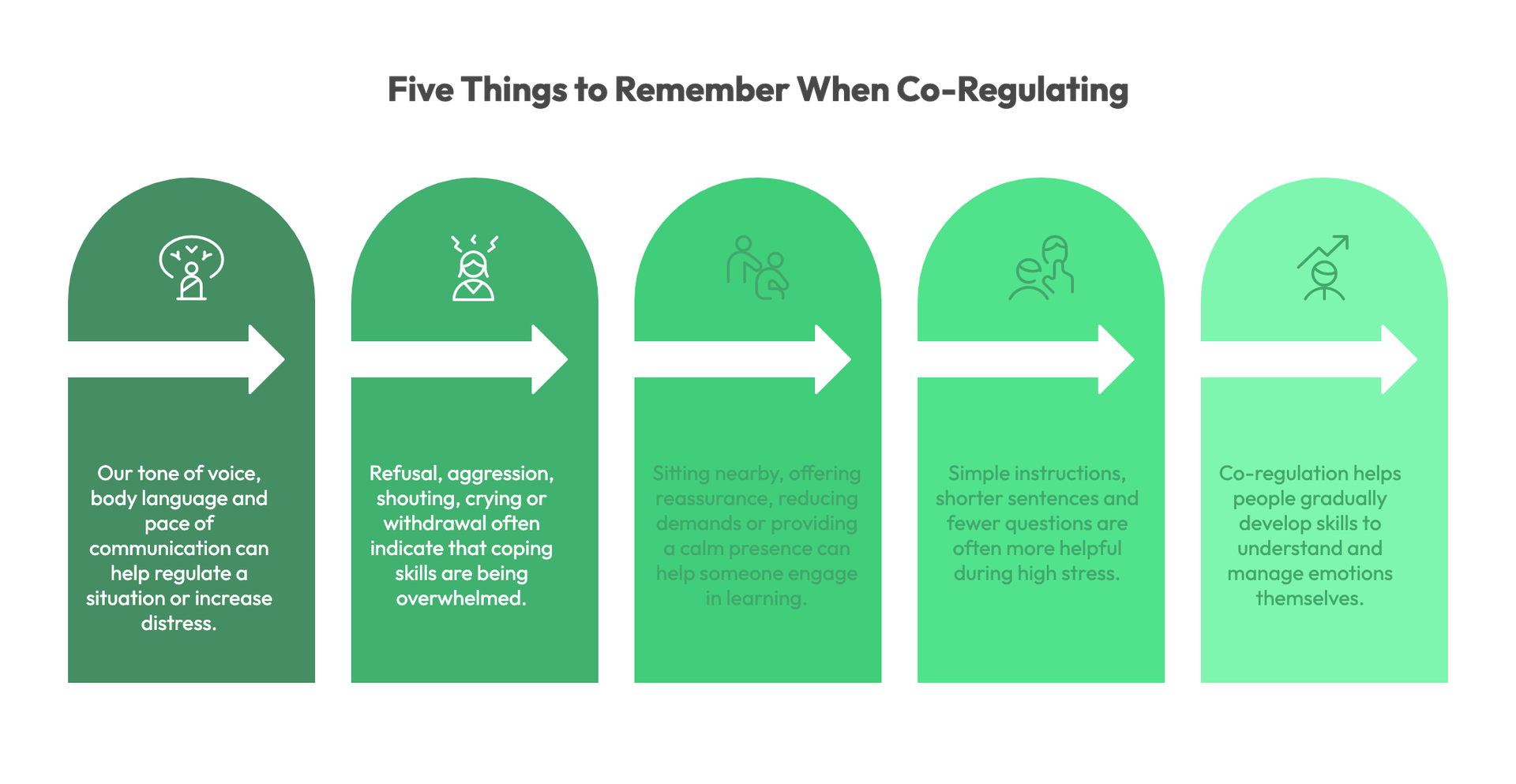
Your Nervous System Matters Too
People are incredibly sensitive to the emotional states of those around them. When we become visibly stressed, frustrated or anxious, the person we are supporting often notices.
This does not mean we have to be perfectly calm at all times. It means being aware that our tone of voice, body language and pace of communication can either help regulate a situation or unintentionally increase distress.
Sometimes taking a deep breath ourselves is the most helpful place to start.
Behaviour Is Often a Sign of Distress
When someone is dysregulated, the behaviour we see is usually only part of the picture.
Refusal, aggression, shouting, crying or withdrawal are often indicators that the person's current coping skills are being overwhelmed. Viewing behaviour through a lens of curiosity rather than judgement can help us respond more effectively.
Instead of asking, "How do I stop this?" it can be helpful to ask, "What might this person need right now?"
Connection Comes Before Correction
When someone is highly emotional, teaching, reasoning and problem-solving are rarely effective.
Many people need connection before they can engage in learning. This may involve sitting nearby, offering reassurance, reducing demands or simply providing a calm and predictable presence.
The goal is not to win an argument. The goal is to help the person return to a state where they can access their thinking skills again.
Less Can Be More
When we are trying to help, it is easy to provide lots of verbal information. Unfortunately, processing language can become much harder during periods of high stress.
Simple instructions, shorter sentences and fewer questions are often more helpful than lengthy explanations.
A calm voice saying, "Let's take a break" is often more effective than several minutes of reasoning.
Regulation Is a Skill That Develops Over Time
Co-regulation is not about preventing every difficult emotion. It is about helping people gradually develop the skills they need to understand and manage those emotions themselves.
Every positive experience of being supported through distress helps build emotional safety, self-awareness and resilience.
Over time, these experiences can strengthen a person's ability to recognise their own feelings, use coping strategies and recover from challenges more independently.
The reality is that nobody is regulated all of the time. We all experience frustration, stress, disappointment and overwhelm. What makes the difference is having supportive people around us who understand how to respond in ways that promote safety, connection and growth.
Co-regulation is not about fixing emotions. It is about helping people move through them. And sometimes, that calm and understanding presence can be more powerful than any strategy we could possibly teach.
News & Insights
Check Our Latest Resources