
Tharon’s Thoughts : What does it mean to discover you're autistic as an adult?

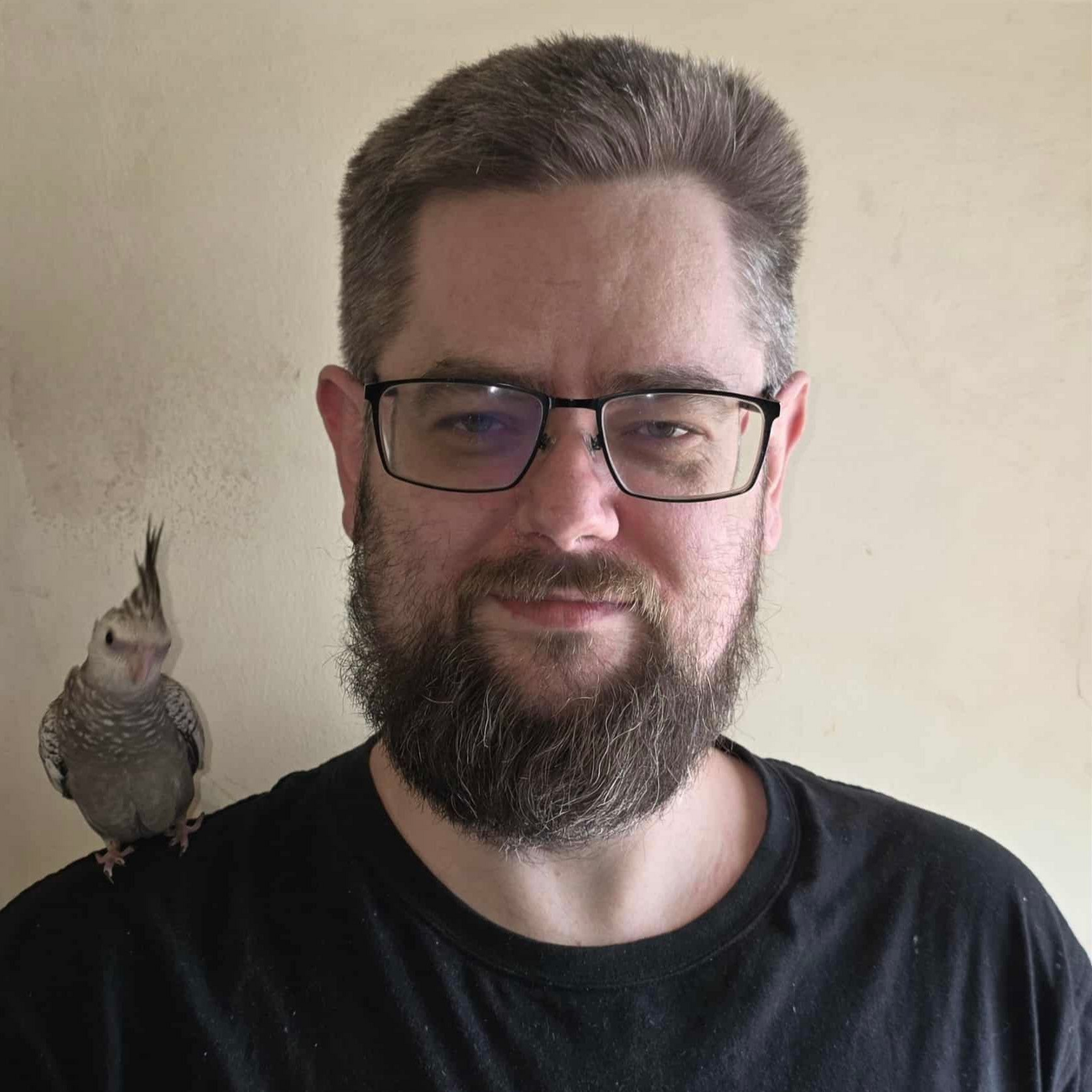
By Tharon
Neurodivergent Consultant at helpz
What does it mean to discover you're autistic as an adult?
For me, a "late diagnosis" is anything beyond childhood. I was diagnosed at 25 years old after spending my entire life knowing I was different, while never understanding why.
Looking back, there were signs everywhere. I underwent assessments as a child, struggled socially, and often felt like I was living by a set of rules that everyone else seemed to understand instinctively. I was what I would describe as a "bully magnet" at school. People around me knew I was different. I knew I was different. What none of us understood at the time was that I was autistic.
For many late-diagnosed autistic people, growing up can involve years of confusion, self-doubt and constant adaptation. We are often told that we're "too much", "too sensitive", "too blunt", or that we need to "tone it down". Over time, those messages become internalised.
Research suggests that autistic individuals are more likely to experience bullying, trauma and adverse social experiences than their neurotypical peers. Many also develop a heightened sensitivity to rejection (Rejection Sensitivity Disorder [RSD]) after years of criticism, exclusion or misunderstanding.
As a child, I learned a simple lesson: do the best you can. The reality was that no matter how hard I tried, I couldn't please everyone. Often it felt like I couldn't please anyone.
Would an Earlier Diagnosis Have Changed Things?
It's a question I often ask myself.
Honestly, I don’t think it would have been very different at all if I had of been diagnosed in the early 1990s. It was a very different time. Autism awareness was lower, supports were less accessible, and many teachers and professionals had limited or more often no understanding of neurodiversity.
Today, things are improving. Research shows that early identification and appropriate support can improve outcomes for autistic children. There is greater awareness in schools, more understanding of sensory needs, and broader acceptance of neurodiversity than there was when I was growing up.
That doesn't mean everything is perfect. Many autistic adults reflect on childhood therapies and wonder whether those interventions unintentionally encouraged masking rather than genuine self-understanding. The conversation around supporting autistic children has evolved significantly, and rightly so.
The Day Everything Made Sense
By the time I sought a formal diagnosis, I already strongly suspected I was autistic.
Like many autistic people, I became deeply invested in researching my experiences. I read extensively, including books like All Cats Are on the Autism Spectrum and All Dogs Have ADHD. As I worked through those books and other resources, I recognised myself in so many of the descriptions.
I wasn't looking for permission to be autistic. I was looking for confirmation.
When I finally received my diagnosis, my overwhelming feeling wasn't sadness.
It was euphoric relief.
My first thought was: "Thank God, now I know what's wrong with me. Absolutely nothing. I am exactly the way God made me, I am exactly the way God intended me to be."
That piece of paper didn't change who I was. It simply gave me a framework to understand myself. And this is the exact reason I encourage everyone who suspects they are autistic/ADHD, to go and get assessed and diagnosed.
After diagnosis, I became obsessed with learning. I researched neurology, psychology, biology and autism. I wanted to understand how my brain worked and why I experienced the world the way I did.
I suddenly had explanations for things I'd done my entire life and could look at them in a new light. I was able to reframe the negative dialogue to a more accurate and truthful outlook.
I remember overhearing family members discussing a lack of eye contact from males when I was a child. Determined to not be like that, I developed a strategy. I would focus intensely on a person's eye colour or eye shape so it appeared that I was making typical eye contact. For years, I thought everyone had to consciously learn these skills.
The Hidden Cost of Masking
One of the biggest realisations many late-diagnosed autistic people experience is understanding just how much energy they have spent masking.
As I have discussed in a previous article, Masking refers to consciously or unconsciously suppressing autistic traits and adopting behaviours that appear more socially acceptable. While masking can help people navigate social environments, research has shown that sustained masking is associated with increased exhaustion, anxiety, depression and autistic burnout.
After diagnosis, many people begin asking themselves difficult questions:
- Who am I when I'm not masking?
- Which parts of me are authentic?
- Which behaviours have I learned simply to survive?
- What pieces of me are actually pieces of other people?
Learning the answers can be confronting.
For some people, diagnosis is followed by grief, depression or what feels like a loss of identity and for many there is a period of skill regression.
A Note on Women and Masking
Research suggests that autistic women and girls often develop stronger masking strategies than autistic males, contributing to delayed recognition and diagnosis. In addition, many autistic/ADHD are socially acceptable in women. Many become experts at observing, copying and camouflaging social behaviours, which can make their autism less visible to others while increasing internal stress and exhaustion.
Understanding these differences remains an important part of improving recognition, diagnosis and support for all autistic people.
What is Skill Regression?
Skill regression refers to a temporary or permanent reduction in a person's ability to perform tasks, cope with demands, or maintain previous levels of functioning.
After diagnosis, many autistic people realise they have been pushing themselves far beyond their sustainable and natural limits for years. Once they stop forcing themselves to maintain unsustainable expectations, certain skills or capacities may appear to decline.
In reality, they are often recovering from chronic stress, burnout and exhaustion.
Many autistic adults describe this period as finally giving themselves permission to be neurodivergent.
The truth is that you may never return to the level of functioning you maintained before diagnosis. But that previous level of functioning came at a tremendous cost that was not sustainable (this is why you burnt out).
You don't always realise how hard you're masking, even from yourself. You don't realise how much pain you've been carrying.
For many people, the diagnosis comes only after burnout has already occurred.
And when recovery eventually happens, they often build a different life, one that is more sustainable, authentic and compassionate toward themselves.
Why Self-Advocacy Is So Difficult
One of the greatest challenges after diagnosis is learning how to advocate for yourself.
That sounds simple.
It isn't.
Many autistic people struggle to identify exactly how they feel. This is called alexithymia. Further, a lot of us lack the communication ability to share those feelings to others. Which can make recognising and describing emotions particularly difficult.
Self-advocacy requires knowing what you need, understanding your limits, and communicating those needs effectively. Not all of us have the ability to do that.
But how do you ask for support when you can't find the words?
How do you explain a sensory overwhelm, a social struggle or a communication difference when you've spent your whole life believing you should just "push through"?
The fear of being misunderstood, dismissed or judged can be paralysing (RSD).
Many autistic people rely heavily on co-regulation, trusted relationships and supportive people around them. In the same way we may need support to regulate our emotions, we may also need support to advocate for our needs.
And that's okay.
Self-advocacy isn't about doing everything alone. Sometimes it's about finding the right people to stand beside you.
A Message for Those Still Wondering
If you're reading this and wondering whether you might be autistic, my advice is simple:
Get assessed.
A diagnosis won't change who you are.
It may create an identity crisis. It may challenge beliefs you've held about yourself for years. It may force you to re-examine parts of your life through an entirely new lens. Shining a new light on old problems.
But it can also bring understanding.
It can provide language for experiences you've never been able to explain.
It can quiet the constant internal battle of wondering why.
You cannot separate yourself from the way your brain works. It affects all aspects of your life, the way you walk, talk and think.
For me, autism is not something I have.
I do not have autism. I am autistic.
Understanding that and accepting myself and my limits has been one of the most liberating experiences of my life. When you understand what you can’t do, you can focus on what you can do.
References
Hull, L., Petrides, K. V., Allison, C., Smith, P., Baron-Cohen, S., Lai, M. C., & Mandy, W. (2017). "Putting on My Best Normal": Social Camouflaging in Adults with Autism Spectrum Conditions. Journal of Autism and Developmental Disorders, 47(8), 2519-2534.
Hull, L., Mandy, W. & Lai, M.C. (2024). Research on autistic camouflaging and mental health outcomes. Current Developmental Disorders Reports.
American Psychiatric Association (2022). Diagnostic and Statistical Manual of Mental Disorders (DSM-5-TR). Washington, DC.
Lai, M.C., Lombardo, M.V., Auyeung, B., Chakrabarti, B., & Baron-Cohen, S. (2015). Sex/Gender Differences and Autism: Setting the Scene for Future Research. Journal of the American Academy of Child & Adolescent Psychiatry.
Cage, E., Di Monaco, J., & Newell, V. (2018). Experiences of Autism Acceptance and Mental Health in Autistic Adults. Journal of Autism and Developmental Disorders.
National Autistic Society. Autistic Burnout, Masking and Mental Health (current guidance and lived experience resources).
Maenner, M. J., et al. (CDC). Autism Spectrum Disorder: Identification and Early Support. Centers for Disease Control and Prevention.
Kinnaird, E., Stewart, C., & Tchanturia, K. (2019). Investigating Alexithymia in Autism: A Systematic Review and Meta-Analysis. European Psychiatry.
Zeedyk, S. M., Rodriguez, G., Tipton, L. A., Baker, B. L., & Blacher, J. (2014). Bullying of Youths With Autism Spectrum Disorder, Intellectual Disability, or Typical Development. Journal of Autism and Developmental Disorders.
World Health Organization (WHO). Autism Spectrum Disorders Fact Sheet (current edition).
News & Insights
Check Our Latest Resources