

Pause & Connect with Cindy

March 7, 2026

To every caregiver who gives and gives - we see you.


We see the quiet strength it takes to keep showing up.

The patience that stretches further than you ever thought it could.

The way you hold space for others, even on days when you’re tired, overwhelmed, or running on empty. What you do matters more than words can fully capture. Yes, it is hard - sometimes deeply hard, but it is also one of the most meaningful and life-shaping acts of care there is. Lives are changed because of your presence, steadiness, and compassion.


As you care for others, your wellbeing matters too - not as an afterthought, but as the foundation that allows you to keep going. Caring is not a sprint; it is a long journey, and it deserves nourishment along the way.


Supporting Caregiver Longevity
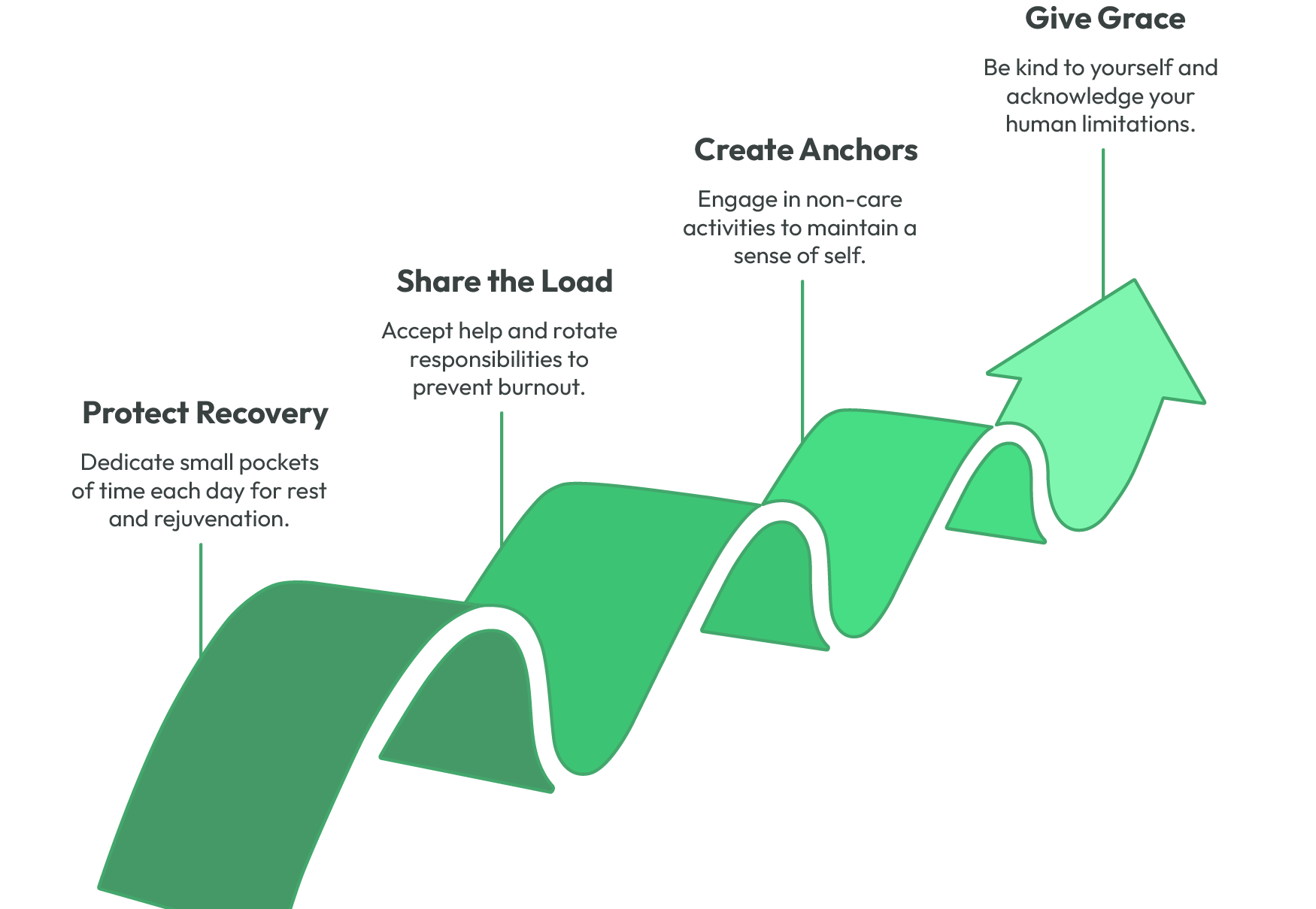
Three simple practices to support your longevity:


Protect small pockets of recovery each day.

Even 10–15 minutes of uninterrupted rest, fresh air, gentle movement, or quiet breathing can help regulate your nervous system and reduce burnout. It doesn’t have to be perfect or restorative - consistency matters more than duration.


Share the load before it becomes overwhelming.

Sustainable care is never meant to be carried alone. Accept help when it’s offered, rotate responsibilities where possible, or speak honestly about what you need. Reaching out is not a failure - it is a form of wisdom!!


Create one “non-care” anchor each week.

Choose something small and regular that has nothing to do with caring, fixing, or being needed. A walk you take, music you play, something you make with your hands, time spent with a book or a plant - anything that quietly reminds you of who you are outside the role. This kind of anchor helps protect your sense of self and gives your nervous system a steady point of grounding.


Most of all, give yourself grace. You are human before you are a helper. Some days will feel messy, tiring, or imperfect and that does not diminish your impact. Caring with a real heart means having limits and honouring those limits is part of doing this work well.

Be as kind to yourself as you are to everyone else. You deserve that same compassion!

News & Insights

Check Our Latest Resources

March 7, 2026
Most of us swallow hundreds of times a day without thinking about it. It’s automatic, something your body just does. But for people living with dysphagia, or swallowing difficulties, this simple act can feel anything but simple. Eating and drinking can become tiring, stressful, or even risky. The Royal College of Speech and Language Therapists (RCSLT) describes eating, drinking, and swallowing as essential to daily life, but for many people, these are activities filled with effort, discomfort, or danger. They also note that swallowing difficulties can deeply affect quality of life and lead to health complications if not managed well. Why Swallowing Is a Big Deal Food isn’t just nutrition. It’s social. It’s comfort. It’s connection. So when swallowing becomes difficult, people may start avoiding meals with others, choosing only “safe” foods, or taking much longer to finish meals. Some people lose weight without trying. Some develop chest infections from food or drink entering their airway. And it’s not because they’re “fussy” or “slow” - it’s because swallowing is an incredibly complex action that relies on more than 30 muscles working in perfect sync. When a neurological condition, developmental disability, or health change disrupts that system, swallowing safely becomes much harder. RCSLT highlights the key role of speech‑language therapists in helping people manage these challenges and maintain independence, safety, and dignity. So What Does Dysphagia Look Like? It varies from person to person, but some common signs include: Coughing or choking when eating or drinking A gurgly or “wet” voice after swallowing Taking a long time to finish meals Feeling like something is “stuck” Frequent chest infections Avoiding certain textures Sudden weight loss Some people show very obvious signs—others hide it well out of embarrassment or anxiety. Who Experiences Dysphagia? Dysphagia isn’t a standalone disability, it appears across a wide range of health conditions and developmental profiles. Many people experience swallowing difficulties because the muscles, nerves, or structures involved in eating and drinking are affected by an underlying condition. For example, people with cerebral palsy may experience dysphagia due to challenges with motor coordination that affect the oral and pharyngeal stages of swallowing. Individuals with developmental disabilities can also experience feeding and swallowing difficulties, as these conditions often impact muscle tone, coordination, or sensory processing needed for safe swallowing. People with Down syndrome may be more prone to swallowing difficulties because of hypotonia (low muscle tone), anatomical differences, and variations in oral‑motor development, which can influence eating and drinking safety. Swallowing difficulties can occur in many other contexts as well—such as ageing, neurological conditions, acquired injuries, or structural changes to the mouth or throat. According to the Royal College of Speech and Language Therapists (RCSLT), eating, drinking and swallowing difficulties significantly affect quality of life and can lead to serious health complications if not identified and supported. Why Talking About Dysphagia Matters Swallowing difficulties are often misunderstood. Many people assume it’s “just part of ageing” or something to quietly work around. But awareness makes a real difference: ✨ It reduces stigma. People are far more likely to speak up about swallowing problems if they feel safe and understood. ✨ It improves safety. Spotting the early signs can prevent choking, malnutrition, dehydration, and pneumonia. ✨ It supports dignity. Everyone deserves to enjoy food and drink in a way that feels comfortable and respectful. ✨ It values the work of support teams. From speech‑language therapists to disability support workers, good mealtime support is life‑changing. How We Can Help Supporting someone with dysphagia doesn’t always require specialist knowledge—small things make a big impact: Slow the pace of meals Follow the recommendations provided by clinicians Support upright, comfortable posture Create calm, distraction‑free mealtime environments Notice changes and speak up early Encourage regular reviews with health professionals Sometimes, the best support is simply giving someone the time and space to enjoy eating without pressure. The Heart of It All: Connection Food brings people together - families, friends, communities. When swallowing becomes difficult, people can feel left out of those shared moments. That’s why awareness isn’t just about safety. It’s about restoring confidence, enjoyment, and a sense of belonging. Dysphagia may not always be visible, but the people living with it deserve to be seen, heard, and supported.
March 7, 2026
Predictability can play a powerful role in helping people feel safe, calm, and ready to take part in everyday activities. When routines are clear and consistent across home, school, and community settings, it becomes much easier for a person to understand what is expected and what will happen next. This sense of certainty can reduce worry, minimise confusion, and prevent escalation before it begins. For many people, especially those with additional support needs, knowing what comes next in the day can be the difference between feeling grounded and feeling overwhelmed. Consistency supports learning as well. When the same expectations and responses are used across different environments, skills build more quickly. A person can practise the same steps, receive the same message, and experience the same outcome each time. This helps strengthen understanding and encourages confidence. Predictability also means that people receive clear and fair guidance. When boundaries or expectations change from one setting to another, it can be difficult for someone to know how to behave or how to prepare themselves emotionally. Consistent routines reduce that pressure and help the person feel more in control. Calm, predictable routines also support positive relationships. When a person knows that adults around them will respond in a steady and supportive way, trust grows. This trust makes it easier for them to accept help, cope with challenges, and manage transitions. It also makes difficult moments less stressful for families and support teams, as everyone is working together with the same shared approach. It is important to remember that consistency does not mean rigidity. It simply means creating a steady foundation that helps the person feel secure. Flexibility still has a place, especially when unexpected events come up, but having a familiar routine to return to makes those changes far easier to manage. Simple things like predictable morning steps, regular cues before transitions, and shared expectations across environments can make an enormous difference in how smoothly the day unfolds.  By building consistent routines and shared approaches, we create environments where people can thrive. A steady rhythm to the day supports regulation, builds independence, and helps reduce stress for the person and the people around them. It is one of the most effective ways we can promote wellbeing, confidence, and meaningful participation at home and in the community.
March 7, 2026
 By Tharon Neurodivergent Consultant at helpz