
Tharon’s Thoughts - Autistic People Crave Connection
By Tharon
Neurodivergent Consultant at helpz
Autistic People Crave Connection, We Just Need Help Navigating It
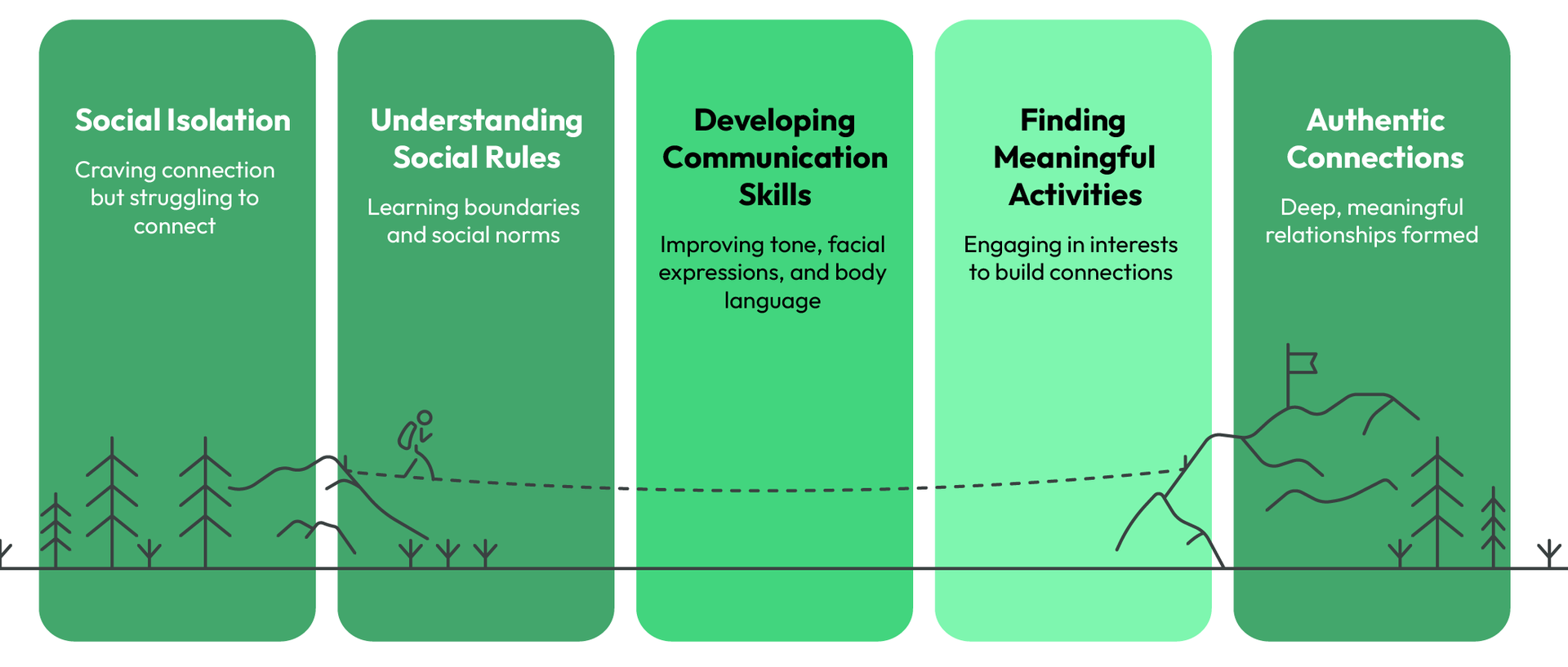
Autistic people often come across as rude or antisocial, but the truth is we crave deep, meaningful connection. The challenge isn’t wanting relationships; it’s knowing how to make them happen. When we do engage socially, things can go sideways, and they go sideways fast. Miscommunication, mistaken intentions, and misunderstood cues create barriers that make forming friendships and maintaining them, difficult. One major reason is our limited understanding of social boundaries - a concept that neurotypical people often take for granted.
A common misconception is that autistic people prefer isolation. This couldn’t be further from the truth. We are starved for connection beyond family and paid professionals. Some of us do not even have that. However, many of us rely on professionals to meet our emotional and social needs, but even then there are levels of relationships that paid supports are unable to meet. What we really want are authentic relationships that aren’t transactional. The problem is we often don’t know the rules of engagement.
Social rules are like an unwritten manual that neurotypicals learn instinctively. For us, it’s different. We need those rules explained, mapped out, and justified. If we don’t know a boundary exists, how can we respect it? Even when we do know, we need to understand why it matters. Take eye contact, for example. Social norms say it’s polite and shows attention. For many autistic people, eye contact is distracting, we focus better by looking away. Yet, this is often misread as disrespect.
Our communication style also differs from neurotypical norms. Tone, facial expressions, and body language can be misinterpreted. We might sound blunt because we value truthfulness, we are told “be honest” but then we’re told, “that was mean and hurts my feelings.” That contradiction is confusing. And phrases like “It’s not what you say, but how you say it”- for us, tone and volume isn’t always something we can control (and same goes for facial expressions), and this leads to a misunderstanding where people incorrectly think we are upset or angry. So, how do we navigate that?
One creative way I’ve practiced social interaction is through poker nights, not for gambling, but for learning. Poker isn’t just about cards; it’s about reading people. It helped me build tolerance for social settings and sharpen my ability to interpret cues. Finding an activity that sparks interest while exposing you to social dynamics can be a game-changer.
We can learn social boundaries when they’re linked to something meaningful. For example, I love jump-scaring people, but I learned that some can’t tolerate it. I often ask for concessions for my own sensory needs, when I compared it to how I feel when those concessions are not met, it clicked. That empathy shaped my behaviour. Daily exposure and patient guidance works best. But here’s the catch: treating us like neurotypicals often invalidates our experience. We need tailored support.
Friendships for us can feel all-or-nothing. When we connect, some of us may want to be glued to someone’s hip, but that intensity can overwhelm others. Often with autistic people, our personal space bubbles are either way too big or way too small. For instance, an entire room may be our personal space, but for others, personal space does not exist. So we may be distant, or in your face. So, on initial first impressions, already there is a miscommunication. A barrier that has potentially already frightened the other person away from the friendship.
Neurotypical friendships grow slowly; ours often skip steps or feel hollow when forced to follow those steps. And when our love isn’t reciprocated? It hurts, a lot. Dating is even harder. We try too much, or not at all. We don’t mean to cling; we just want connection and don’t know how. We are doing our best with our limited understanding of the rules.
What we need is patience, guidance, and understanding. When we seem blunt, it’s not rudeness, it’s honesty. When we misread a relationship, it’s not manipulation, it’s misunderstanding. We love deeply, and when that love is shut down, it’s devastating. So next time you meet someone autistic, remember: we’re not antisocial, we’re trying. Hard. And when you help us navigate those invisible social boundaries, you’re not just teaching rules, you’re opening doors and forging the meaningful connections we crave.
Navigating Social Connections for Autistic Individuals
Did you know that research shows autistic people often experience higher levels of loneliness than neurotypicals, despite wanting friendships just as much? Our loneliness is not just a lack of connection and being lonely, it is also about not being anybody’s somebody. Studies also suggest that structured social activities, like board games or hobby groups, can significantly improve social confidence and reduce isolation. You can also introduce us to people – help us build a network around us.
Be patient with us, understand that an autistic person is not being rude, they are trying. What we need from you is patience, support, and guidance. Instead of expecting us to meet neurotypical social rules, try to also learn our social rules from our perspective, and maybe we can meet in the middle. The best thing we can be is our authentic selves.
News & Insights
Check Our Latest Resources