

Pause & Connect with Cindy: What you do is significant

April 3, 2026

What you do is significant

Before anything else - pause here for a moment and let that land. 


In the day-to-day, it can be easy for your mind to drift into believing that what you do is just routine… just part of getting through… just another task on a long list. But the truth is, what you do every single day holds deep meaning. 


Caring for a child or loved one with additional needs, whether you are a parent, foster carer, grandparent, or supporting an adult child or parent is not small work. It is steady, unseen, often unacknowledged work that requires patience, resilience, and an incredible amount of heart. 


And sometimes, because it happens in the quiet, ordinary moments, it can feel invisible. 


But it’s not.
You are not. 


As we move through April and the middle of the school holidays, routines shift, days can feel longer, and the demands can increase. It can be overwhelming.

And in those moments, it’s even more important to gently bring yourself back to what is true: 


What you do matters.
 
You are important.
 
The role you play is deeply valuable.


This isn’t about adding pressure or asking you to do more, it’s about creating a small space to renew your mind, to pause, and sit in that truth for a moment. 


Because when we pause, even briefly, we can reconnect with the purpose in what can sometimes feel like repetition. We can soften the noise that tells us it’s not enough. 


This season can also offer an opportunity - not for perfection, but for small, meaningful moments of connection and calm. 


Here are a few gentle ways to support both your child and yourself over this time: 


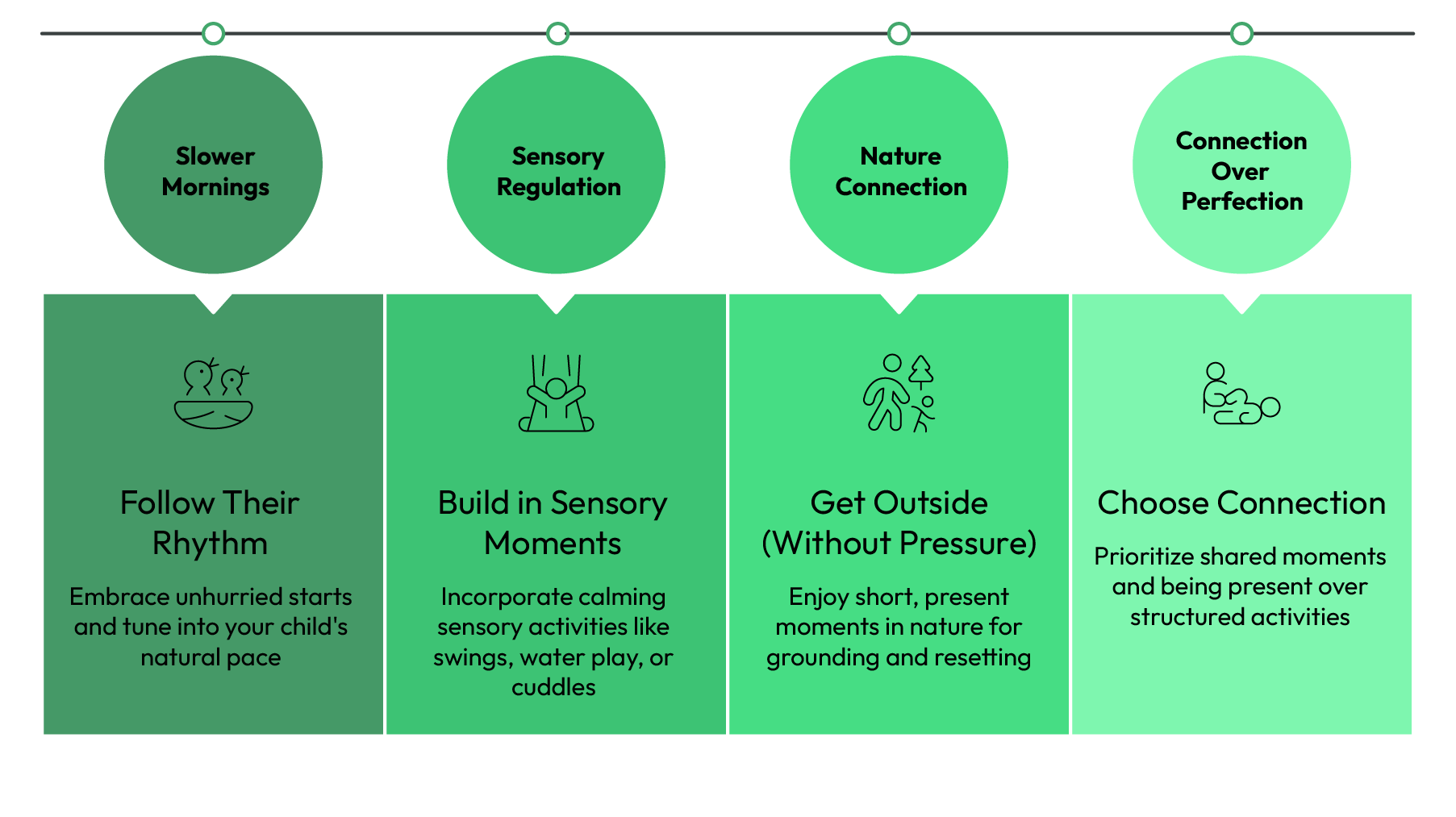
1. Follow Their Rhythm
 
Let go of the pressure to fill every moment. Slower mornings, extra downtime, and tuning into your child’s natural rhythm can bring a sense of calm for everyone. 


2. Build in Sensory Regulation Moments
 
Incorporate activities your child enjoys swings, water play, planting something small, deep pressure like blankets or cuddles, or quiet time. When your child feels regulated, it creates more ease for you too. 


3. Get Outside (Without the Pressure)
 
Being present in nature is grounding. A short walk, sitting in the sun, or time in the backyard can gently reset both of your nervous systems... no big plans needed!! 


4. Choose Connection Over Perfection
 
It doesn’t have to be structured or look a certain way. Sitting together, sharing a moment, or simply being present is enough. These are the moments that truly matter. 


Strategies for Navigating School Holidays with Children
Three simple practices to support your longevity:


Protect small pockets of recovery each day.

Even 10–15 minutes of uninterrupted rest, fresh air, gentle movement, or quiet breathing can help regulate your nervous system and reduce burnout. It doesn’t have to be perfect or restorative - consistency matters more than duration.


Share the load before it becomes overwhelming.

Sustainable care is never meant to be carried alone. Accept help when it’s offered, rotate responsibilities where possible, or speak honestly about what you need. Reaching out is not a failure - it is a form of wisdom!!


Create one “non-care” anchor each week.

Choose something small and regular that has nothing to do with caring, fixing, or being needed. A walk you take, music you play, something you make with your hands, time spent with a book or a plant - anything that quietly reminds you of who you are outside the role. This kind of anchor helps protect your sense of self and gives your nervous system a steady point of grounding.


Most of all, give yourself grace. You are human before you are a helper. Some days will feel messy, tiring, or imperfect and that does not diminish your impact. Caring with a real heart means having limits and honouring those limits is part of doing this work well.

Be as kind to yourself as you are to everyone else. You deserve that same compassion!

News & Insights

Check Our Latest Resources

April 3, 2026
The NDIS continues to evolve. In 2026, many participants and families are feeling the impact of legislative updates, tighter plan reassessments, funding scrutiny and an increased emphasis on evidence and measurable outcomes. For some, this has meant shorter plans. For others, requests for additional documentation or functional evidence. For many, it has meant uncertainty. If you are feeling unsure about what these changes mean for you or your family member, you are not alone. Understanding what is shifting, and why, can help you prepare and advocate with confidence. The reform context The National Disability Insurance Scheme Amendment (Getting the NDIS Back on Track No. 1) Act 2024 introduced structural reforms designed to improve the long-term sustainability and consistency of the Scheme. Legislation: https://www.legislation.gov.au/Details/C2024A00055 Funding decisions continue to be guided by Section 34 of the NDIS Act . The broader reform direction was shaped by the Independent Review of the NDIS . What is actually changing for participants in 2026 Participants are experiencing: • Stronger application of “reasonable and necessary” criteria • Greater emphasis on functional evidence • Increased documentation requirements • More structured plan variations and reassessments • Closer alignment between goals and funded supports • Heightened compliance and cost scrutiny The NDIA Operational Guidelines clarify that supports must relate directly to functional impairment.able-and-necessary-supports The Disability Royal Commission Final Report . NDIS Quarterly Reports . The Australian Institute of Health and Welfare . Practical steps before your next plan review Request updated functional assessments early. Align goals clearly to daily functioning. Document changes, regression or increased needs. Outline risks if therapy reduces or ceases. Track measurable progress. Seek written clarification where needed. At helpz, we prioritise clear reporting, measurable outcomes and collaborative communication to support participants through change.
April 3, 2026
Pathological Demand Avoidance, sometimes reframed as Persistent Drive for Autonomy, is a profile that many people within the autism community recognise. Although PDA is not a formal diagnosis in current diagnostic manuals, many clinicians and autistic individuals describe it as a meaningful way of understanding patterns of demand avoidance that stem from anxiety, uncertainty, and a strong need for autonomy. PDA is often misunderstood, which can lead to unhelpful assumptions or the belief that individuals are being deliberately oppositional. A neuroaffirming perspective helps us understand PDA as a valid part of neurodiversity. It shifts the focus away from control and compliance and towards emotional safety, autonomy, and collaboration. What Is PDA PDA describes an anxiety driven need to avoid everyday demands, even when the person wants to participate. These demands may feel overwhelming or threatening because they involve expectation, uncertainty, or a loss of control. Common characteristics described in the PDA profile include: A strong need to avoid demands, sometimes using strategies like humour, negotiation, distraction, or retreat A style of communication that may appear socially confident at first but does not always match deeper social understanding Rapid changes in mood, often linked to pressure or anxiety A comfort with imaginative play or adopting roles, which can help manage stressful situations These behaviours are not acts of defiance. They are protective responses from a nervous system that experiences demands as a source of intense stress. Is PDA a Diagnosis PDA is not recognised as an independent diagnosis in the DSM or ICD. Many professionals view it as a profile within autism, while others see it as a pattern that can appear in a range of neurodivergent presentations. There is ongoing debate, and research is still developing. Despite this, PDA is increasingly recognised in multidisciplinary autism assessments, particularly in the United Kingdom. Families and practitioners often find the PDA framework useful because it offers a way to understand demand avoidance compassionately and practically. Why Understanding PDA Matters People with PDA are often described as oppositional or non compliant, when in reality their behaviour reflects: high anxiety sensitivity to expectations a need for predictability a strong drive for autonomy and control When misunderstood, young people and adults with PDA may experience unnecessary conflict, shame, or burnout. A more informed perspective encourages compassion and supportive strategies instead of pressure or discipline. Neuroaffirming Approaches to Supporting PDA Supporting individuals with PDA is most effective when the focus is on reducing pressure, building trust, and supporting autonomy. Reduce Demands Where Possible Small changes can make a big difference. Indirect language, gentle invitations, choices, humour, and collaborative problem solving reduce pressure and help the person stay regulated. Traditional reward systems or consequences often increase anxiety and are less effective. Increase Autonomy A sense of control helps reduce distress. Offering choices, negotiating tasks, and allowing flexibility helps build cooperation and reduces overwhelm. Support Emotional Safety PDA is closely linked to anxiety and uncertainty. Predictable routines, sensory supports, clear expectations, and a calm supportive presence can help reduce stress. Connection and co regulation often pave the way for engagement. Work With Strengths Creativity, quick thinking, focused interests, humour, and imaginative play are often strong tools for learning and communication. Using these strengths helps build confidence and makes participation feel safe. A Neurodiversity Affirming Perspective Some clinicians and advocates argue that the term PDA can be pathologising, because it suggests something is wrong with a person’s natural need for autonomy. Alternative terms like Persistent Drive for Autonomy reflect a more respectful understanding of how the individual experiences the world. This perspective views PDA as a difference rather than a problem and focuses on approaches that prioritise dignity, safety, and empowerment. Summary PDA is a meaningful way to understand how some autistic and neurodivergent individuals respond to demands. It is not about refusing for the sake of it. It is about managing anxiety, protecting autonomy, and navigating a world that often feels unpredictable or overwhelming. Awareness and compassionate understanding help families, educators, support workers, and clinicians create environments where individuals with PDA can feel heard, respected, and supported to thrive. References PDA Society. Identification and Assessment of a PDA Profile. Gerlach, J. (2024). Five Things to Know About Pathological Demand Avoidance. Psychology Today. Naseef, R., Shore, S. (2025). Reframing Pathological Demand Avoidance. Autism Spectrum News. Science Insights (2026). What Is a PDA Diagnosis. AuDHD Psychiatry UK (2026). What Is PDA Autism. PDA North America (2025). Understanding and Supporting PDA.
April 3, 2026
Each year on April 2, World Autism Day gives us an opportunity to pause and reflect, not just on what autism is , but on how we as a community can create spaces where autistic people feel genuinely understood and supported. The conversation is slowly shifting from “awareness” to “acceptance,” and that shift really matters. Awareness is knowing autism exists. Acceptance is changing how we respond, communicate, and include. So, what does meaningful acceptance actually look like in everyday life? Recognising Autism as a Different Way of Experiencing the World One of the most important steps is understanding that autism isn’t something to fix. It’s a neurotype, a different way of thinking, sensing, learning, and interacting. When we frame autism this way, we stop trying to make people “fit” and start looking at how environments, routines, and expectations can better support them. Often the challenge isn’t the person; it’s the noise, unpredictability, or pace of the world around them. Listening to Autistic Voices A lot of the most valuable insight comes from autistic adults and children who openly share their experiences. Many talk about the importance of autonomy, clear communication, and having their sensory and emotional needs respected. Acceptance means asking questions like: “What helps you feel comfortable?” “How would you prefer to communicate?” “Would you like choices or support with this task?” It’s simple, but it shows respect and it gives people control over their own lives. Making Environments More Supportive Small adjustments can make a huge difference: dimmer lighting or quieter spaces clear routines or visual guides time to process information predictable transitions reducing sensory overload where possible These aren’t dramatic changes, they’re thoughtful ones. And they help create a sense of safety and calm. Respecting Different Communication Styles Not everyone communicates in the same way. Some people use spoken language, some use AAC, some use gestures or writing, and some take a little extra time to respond. All of these are valid. Supporting communication might mean waiting a few extra seconds, offering visual choices, or checking in without pressure. It’s about meeting someone where they are, not rushing them to where we think they should be. Celebrating Strengths and Interests  Many autistic people have deep interests, incredible focus, creativity, strong memory skills, or a unique perspective that adds so much richness to their families, schools, and communities. Acceptance means valuing these strengths—not dismissing them as “fixations” or redirecting them unnecessarily. Passion is a powerful tool for learning, emotional regulation, and confidence. Prioritising Autonomy Ultimately, acceptance is about supporting people to make their own choices wherever possible - around routines, communication, sensory needs, and participation in community life. When we give autistic individuals the space to be themselves, we support genuine independence and wellbeing. A Day That Reminds Us of the Bigger Picture World Autism Day isn’t about wearing a colour or posting a hashtag. It’s a reminder that inclusion happens in the day‑to‑day decisions: the conversations we have, the flexibility we offer, the assumptions we let go of, and the voices we uplift. Acceptance is ongoing work, but it’s deeply worthwhile. When we create environments where autistic people feel understood, respected, and supported, everyone benefits. It’s how we build communities where all neurotypes can thrive.