
Tharon’s Thoughts - Special Interests, Hyperfocus & How They Shape Neurodivergent Lives

By Tharon
Neurodivergent Consultant at helpz
Special Interests, Hyperfocus & How They Shape Neurodivergent Lives
Special interests are one of the most defining and powerful features of neurodivergent experience, but they don’t look the same across the spectrum. For autistic people, a special interest is a deep, enduring pull toward a topic. It never truly disappears; instead, it ebbs and flows throughout life. Research shows autistic special interests are highly focused passions that support emotional regulation, provide joy, and often give a strong sense of identity and purpose. In contrast, for people with ADHD, interests are usually what is referred to as “hyperfocus”. They tend to appear as an intense but temporary interest, something that burns bright and then shifts elsewhere. ADHD hyperfocus episodes are well‑documented, with studies showing they can last hours, days or months, before the brain moves on to the next stimulating idea or task.
For autistic people, a special interest doesn’t fade out the same way. It might step back from centre stage, but it never leaves the theatre entirely. These interests can appear in familiar themes: snakes, the Titanic, history, engineering, and yes… trains, planes and automobiles. Popular culture has even offered useful examples. The Good Doctor showcases how an autistic special interest can evolve into a vocational pathway. While the character’s reactions are dramatized for television, the internal experience, the way stress rises internally, even when not visible externally, resonates with many autistic people. The show also provides a rare glimpse into how regulating through interest works behind the scenes.
Alongside special interests sits something I often call “specialised anxiety.” This occurs when an autistic (or sometimes ADHD) person is unable to engage in stimming or access their special interest. Research shows that autistic people use stimming and focused interests to regulate sensory input, reduce overwhelm, and manage anxiety; being prevented from doing so is associated with increased stress and decreased sense of control. When we can’t access the thing that helps keep our nervous system steady, dysregulation follows. It can feel physically painful- like the whole system lights up with pain.
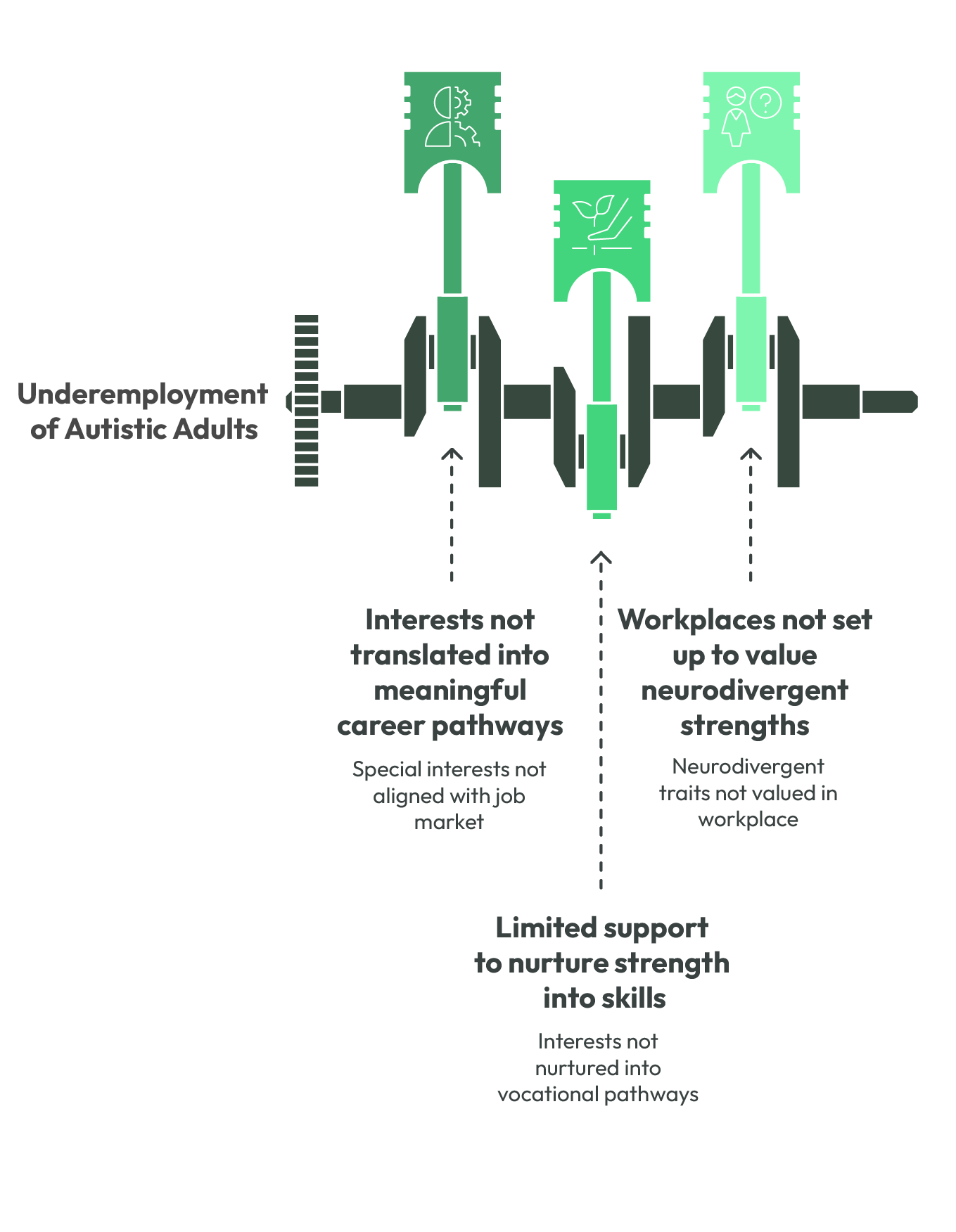
The relationship between neurodivergence and work is also shaped by these differences. ADHD hyperfocus often fuels entrepreneurial energy. The hyperfocus can be “productive but risky” as it leads to bursts of creativity, intense interest, and sometimes the quick pivoting between projects that many ADHD entrepreneurs recognise. For autistic people, however, special interests can become long‑term vocational pathways when nurtured early. Studies show that more than 60% of working autistic adults report their special interests directly supporting their success in work or study, and more than 80% say these interests provide empowerment and emotional regulation (Bernard, et al., 2021). This is why autistic professionals often thrive in roles connected to their areas of passion, and why autistic carers or mentors may use their interests to bond with children, helping them learn through something personally meaningful. That being said, employment for autistics is low, with data saying only 42% of autistic adults are employed in the workforce in Australia.
In education, special interests are one of the most powerful tools we have. If a child loves birds, use birds to teach maths. Let them read and write about birds to build literacy skills. Evidence consistently shows that when autistic children engage through preferred interests, learning becomes more accessible, motivating, and regulated.
Special interests and hyperfocus also play a central role in emotional regulation. They help us stay grounded, reduce sensory overwhelm, and stabilise mood. Research indicates that being able to engage in self‑regulatory behaviours, including focused interests or stimming, directly increases a person’s sense of control and wellbeing and ability to engage in social situations. Conversely, stopping abruptly can be very difficult. Imagine a train moving at full speed; it cannot stop on demand without risk of it being derailed. That’s what it feels like for us when we’re asked to disengage suddenly.
Most of us prefer to explore our interests alone during the “deep dive,” but once we’ve gathered the knowledge, we love to share it, especially with people we trust or trying to build a connection with. Asking about a special interest is an invitation into our world, but it comes with a warning: if you ask, be ready for a flood of information. This “info‑dumping” is a form of connection. Special interests often correlate with enthusiasm, emotional expression, and social bonding within autistic communities. Stopping mid‑stream is hard, not because we’re ignoring social cues, but because the cognitive momentum is still moving, just like the train metaphor used above. So, pull up a seat – you may be listening for a while.
Gaming is another area where special interests often settle, especially for neurodivergent kids. Games offer structure, predictability, and a rewarding feedback loop that mirrors the satisfaction of special interests. Game‑based interventions have been shown to improve social skills, cooperation, communication, hand-eye coordination, and cognitive flexibility among autistic children. Online play can also create low‑pressure opportunities to build team skills, and social connection without the intensity of face‑to‑face interaction.
But gaming also comes with risks. The concept sometimes referred to as “digital dementia” has been debated widely. Some studies suggest excessive passive screen time may negatively affect memory or executive functioning in young people, including literal shrinking of the brain. Some games are deliberately developed to become addictive to encourage game play to continue, similar to the effect of poker machines. However, other studies show, that digital technology use in adults may actually support cognitive resilience rather than harm it. What we do know is that brains can form intense neurological reward loops around digital interests, making moderation essential to avoid addiction.
And moderation is the key across all special interests. Children should be supported to engage in their interests, not shut down, but they also need guidance in balance, priority‑setting, and recognising their own energy limits. These skills become powerful lifelong tools. Working with the brain, not against it, is how we help neurodivergent children (and adults) grow in healthy and sustainable ways.
Most importantly, special interests are a bridge between the neurodivergent and neurotypical worlds. Autistic and ADHD people often find it hard to enter neurotypical social spaces, not because we don’t want to, but because we don't always know how. But when someone steps into our world, asks about our interest, shows genuine curiosity, we see the effort, and it matters. It opens the door for connection. And once that door is open, we're far more likely to walk through to meet you.
Reference:
Bernardin, C.J., Brown, C. & Kanne, S. (2021) Characterization of Special Interests in Autism Spectrum Disorder: A Brief Review and Pilot Study Using the Special Interests Survey. Thompson Center for Autism & Neurodevelopmental Disorders. Available at: https://thompsonfoundation.org/wp-content/uploads/2021/10/Research-SpecialInterests-pre-pub.pdf (Accessed 21 January 2026). Navigating Social Connections for Autistic Individuals
Did you know that research shows autistic people often experience higher levels of loneliness than neurotypicals, despite wanting friendships just as much? Our loneliness is not just a lack of connection and being lonely, it is also about not being anybody’s somebody. Studies also suggest that structured social activities, like board games or hobby groups, can significantly improve social confidence and reduce isolation. You can also introduce us to people – help us build a network around us.
Be patient with us, understand that an autistic person is not being rude, they are trying. What we need from you is patience, support, and guidance. Instead of expecting us to meet neurotypical social rules, try to also learn our social rules from our perspective, and maybe we can meet in the middle. The best thing we can be is our authentic selves.
News & Insights
Check Our Latest Resources